Bhutan
Bhutan Spirit Sanctuary
Duration
Nightly
Investment
From Strating $746
Rating
5.0 / 5.0
The Bhutan Spirit Sanctuary is a unique luxury property in the kingdom, notable for its distinct operational philosophy and design. Located in the Neyphu Valley in Paro, it stands apart from standard five-star hotels by operating as a dedicated, fully wellness-inclusive sanctuary.
1. Architectural Design Inspired by Dzongs
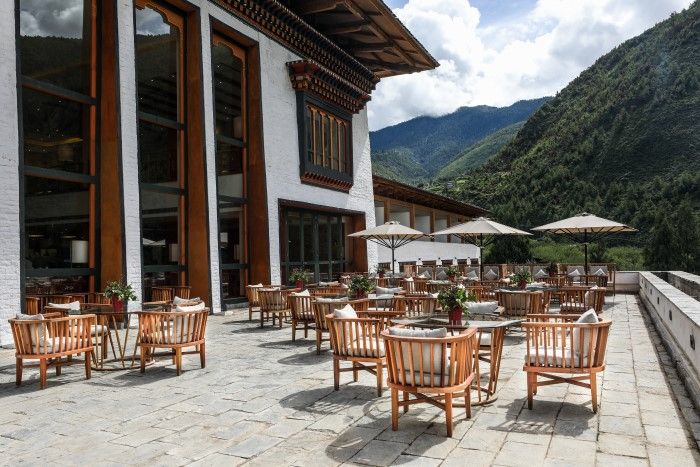
Unlike many international luxury brands that build sprawling villas, the Bhutan Spirit Sanctuary is designed to resemble a traditional Bhutanese dzong (a fort-like monastery)
The property incorporates massive white walls, intricately carved wooden beams, and traditional prayer wheels. Before entering the main property, guests walk through a central courtyard and pass through a dedicated “transformation room” designed to encourage a deliberate mental transition into a quieter state of mind.
2. A “Wellness-Inclusive” Operational Model
The sanctuary does not charge ala-carte for individual therapies; instead, everything is included in the room stay. The core framework focuses on Sowa Rigpa (Traditional Bhutanese Medicine).
- Doctor Consultation: Upon arrival, guests have a private consultation with in-house traditional medicine doctors (graduates of the Faculty of Traditional Medicine in Thimphu) who assess their nye pa (the body’s balancing energies, often categorized into wind, bile, and phlegm).
- Customized Treatments: Based on the pulse diagnosis, a personalized regime is established. This includes unlimited access to specialized therapies like moxibustion (applying heated herbal compressed parcels to the skin), ku nye (Tibetan full-body massage), hot-oil compressions, and traditional herbal hot stone baths.
- Apothecary Collection: The wellness lounge stocks over 60 varieties of indigenous Himalayan herbs used to customize treatments and targeted herbal teas.
3. Culinary Philosophy: No Fixed Menus
The dining experience directly mirrors the wellness approach. There are no standard ala-carte menus for lunch or dinner. Instead, the culinary team collaborates with the traditional medicine doctors to design daily four-course lunches and six-course dinners tailored to the guests’ health profiles and dietary needs. Much of the produce is sourced directly from the sanctuary’s own organic greenhouse and vegetable gardens, or from neighboring valleys, implementing a strict farm-to-table practice.
4. Sustainability and Social Integration
- Zero-Plastic Policy: The property runs on a strict no-plastic model. Single-use plastic bottles are replaced with reusable glass alternatives. Guest bathrooms feature bamboo toothbrushes, toothpaste tablets, and zero-waste soaps handcrafted by local Bhutanese brands like Mudra.
- Local Workforce: More than 95% of the staff are Bhutanese nationals, including all middle management positions, ensuring economic support remains heavily centered within the local community.
- Cultural Preservation: Instead of transient sightseeing, guests are encouraged to participate in localized cultural traditions on-site, including traditional pottery throwing in an art studio, Bhutanese cooking classes, and traditional archery (da) or darts (khuru) in the apple orchards.